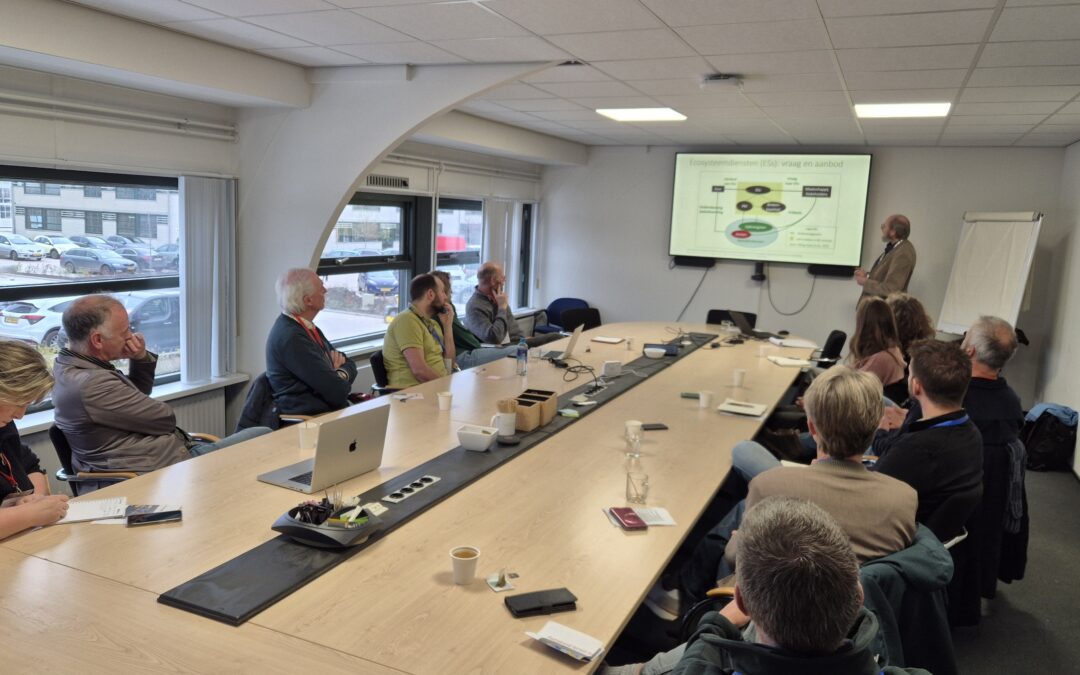
On December 2nd, 2025, the SoilValues project was presented at the “Knowledge and Soil Day” in Lelystad, the Netherlands—an event organised by Wageningen University & Research (WUR) together with several Dutch organisations involved in soil policy, research, advisory services, and practical implementation. The day brought together a diverse group of stakeholders, creating an ideal setting to discuss how improved soil health can be supported through innovative business models.
During the event, Bert Smit (WUR) led two workshops entitled “Rewarding of ecosystem services”. In these sessions, he introduced the conceptual framework developed within SoilValues WP1, as published by PhD researcher Youssef Wang-Touri. The framework explores how improvements in ecosystem services and soil health can be combined with economically viable farm incomes through appropriate reward mechanisms.
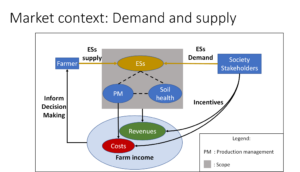
One of the highlights of the workshops was the contribution of a regenerative organic farmer, who shared how he had restructured his farming system to prioritise soil quality. By relying solely on plant-based fertilisers, introducing flower strips, and adopting strip cropping, he has achieved excellent soil water quality. However, he also underlined the economic challenges he faces. Although his production is certified as “vegan,” the value chain for such products remains underdeveloped, forcing him to sell most of his output as bulk organic produce. This sparked an animated discussion on how soil health business models could better reward farmers for the ecosystem services they provide.
Initial findings from ongoing research already suggest that meaningful improvements in ecosystem services often require substantial changes in farm management practices. The next step is the development of a bioeconomic model that will allow these strategies to be assessed at a broader scale and across different contexts. One thing is sure: improving ecosystem services requires relatively big changes in crop production management!